


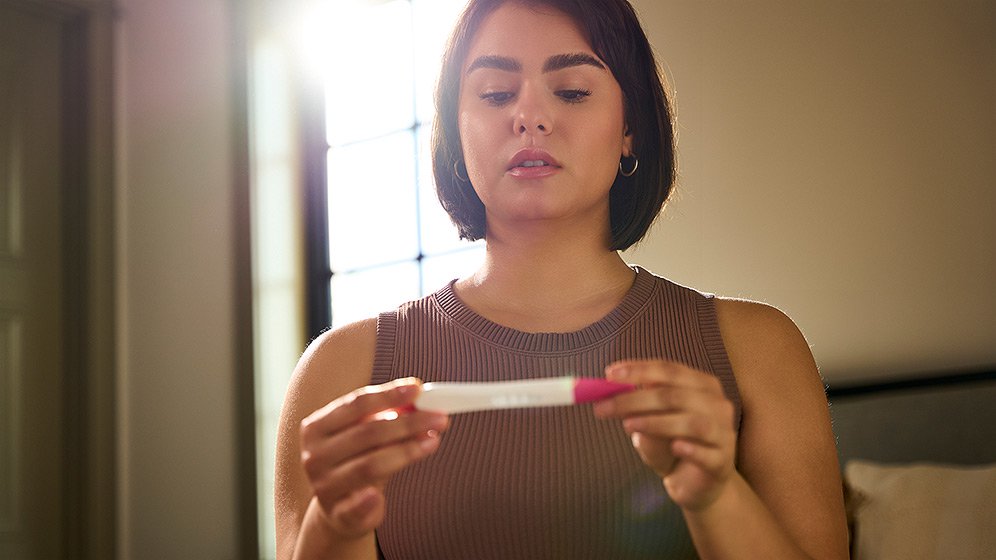
You pee on a stick and then a few minutes later the answer to a crucial question for many women appears in a small window, telling you if you are pregnant or not pregnant. When you suspect pregnancy, understanding how to use a pregnancy test becomes essential. This article will explain how to take a pregnancy test, so you can trust the results and feel calm doing so. Home pregnancy tests are simple, fast to use, and when used as indicated, can have greater than 99% accuracy.
How Does an At-Home Pregnancy Test Work?
Home pregnancy tests are designed to detect the presence of the human chorionic gonadotropin (hCG) hormone in urine. Produced during pregnancy, hCG can be detected shortly after implantation. While a positive test result indicates the presence of hCG, suggesting pregnancy, a negative result may not entirely exclude the possibility of pregnancy. This is particularly true when using an Early Result pregnancy test, due to hormonal variations among women and between pregnancies.
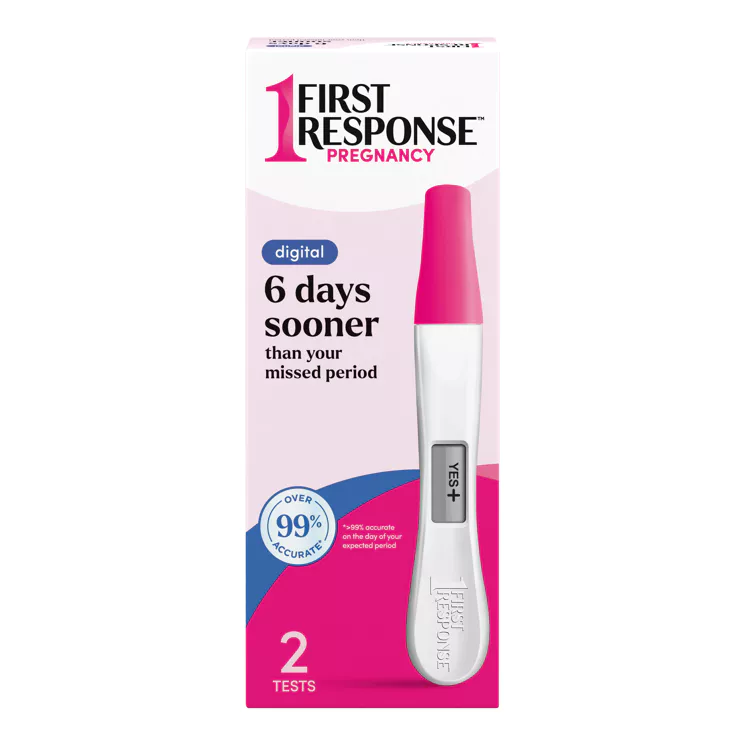
If you’re experiencing early pregnancy symptoms and suspect you might be pregnant, a home pregnancy test is a convenient and private way to test if you are pregnant. It allows you to take the test in the comfort of your own home without having to visit a doctor’s office or laboratory. Various home pregnancy tests and strips are available, including traditional urine tests usable from the first missed period day, digital tests providing clear results, and early detection tests capable of identifying pregnancy before your missed period.
How Do You Take a Pregnancy Test?
If you’re unsure how to use a pregnancy test, here’s a step-by-step guide to help you through the process:
- Choose the Right Test: Head to a pharmacy or store and select a reliable home pregnancy test kit. There are various brands available, but make sure to pick one that is easy to use and has clear instructions.
- Read the Instructions: Carefully read the instructions provided with the pregnancy test kit before you begin. Each brand and test will have different procedures, so it’s important to understand the specific steps for the product you have chosen.
- Apply Urine: Follow the instructions to collect a urine sample. Most tests require you to either hold the test stick in your urine stream or collect a urine sample in a clean container and then dip the stick into it for a specified amount of time.
- Wait for Results: After performing the test, place it on a flat surface and wait for the designated amount of time as mentioned in the instructions. Avoid moving or disturbing the test during the waiting period.
- Interpret the Results: Once the specified time has passed, check the test for results. Most tests will display the results in the form of lines, symbols, or words indicating whether you are pregnant or not pregnant. Make sure to read the results within the specified time frame mentioned in the instructions, as leaving it for too long can lead to inaccurate results.
- Seek Further Advice if Necessary: If you have any doubts or concerns about the results, or if you’re unsure how to interpret them, you should seek advice from a healthcare professional. They can provide guidance and support, as well as confirm the results with additional testing if needed.
Remember to remain calm throughout the process. Taking a pregnancy test can be nerve-wracking, especially if it’s your first time. Following the test’s specific instructions carefully can help ensure accurate results .
Pregnancy Test Taking Tips
Understanding when to take a home pregnancy test and avoiding common mistakes can lead to accurate results and ease your anxieties. Here are some additional tips on how to accurately take a pregnancy test:
- Check the expiration date before using.
- Read and follow the instructions carefully, step by step.
- Make sure to use the test immediately upon opening the wrapper.
- If you’re testing before a missed period, use your first-morning urine for best results. After a missed period, the hCG hormone is usually higher and easier for tests to detect.
- Use a clock or a timer when taking your test to keep track of proper times. It is important to remain patient. Reading your results before the instructed time can give inaccurate results, especially if you’re testing early.
- Proper handling and storage are crucial for accurate results. Store kits in a cool, dry place away from sunlight and extreme temperatures.
Understanding Home Pregnancy Test Results
Understanding home pregnancy test outcomes is crucial for making informed decisions. When reading test lines, remember that the control indicates correct test functioning.
Depending on the brand, a positive result may be indicated by the appearance of both lines, a plus symbol, or even a smiley face. Additionally, it may display the word “pregnant,” all signaling the detection of hCG in urine. Conversely, negative results indicate the absence of detected hCG, suggesting non-pregnancy.
Invalid results occur when the test fails to provide a clear answer, often due to improper usage or kit issues. In such cases, it’s recommended to retest for clarity.
What to Do After You Take a Pregnancy Test
If you receive a positive result from a urine pregnancy test, it’s important to contact your doctor and schedule an appointment promptly.
In case of a negative or inconclusive result and if your period hasn’t been missed yet, wait a few days and retest. If your period is delayed by a week or more and you continue to receive negative results, it’s advisable to reach out to your doctor.
Although various factors besides pregnancy can lead to a delayed period, informing your doctor is essential to determine the proper steps to help regulate your body’s schedule. Additionally, you might be pregnant but with hCG hormone levels not yet detectable by the test.
Where to Buy First Response Pregnancy Tests
You can purchase First Response home pregnancy tests over the counter and without a prescription at most drug stores and supermarkets, or conveniently online. No ID or specific age requirement is necessary. Explore the various types of tests offered by First Response below, to make your pregnancy testing experience stress-free and straightforward.
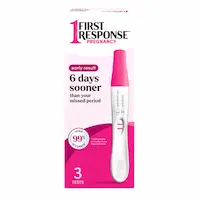
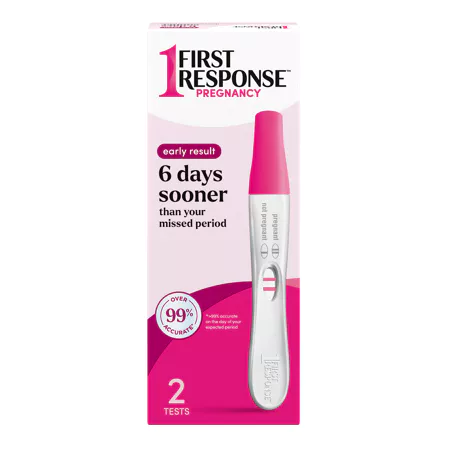
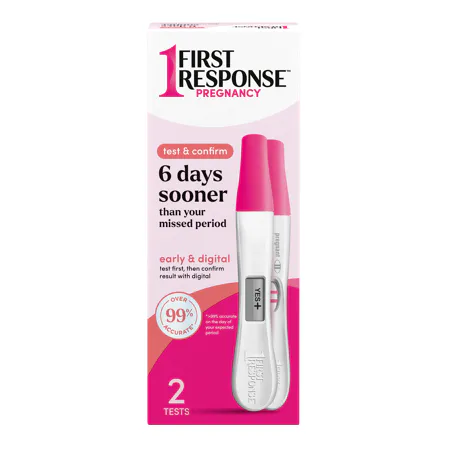
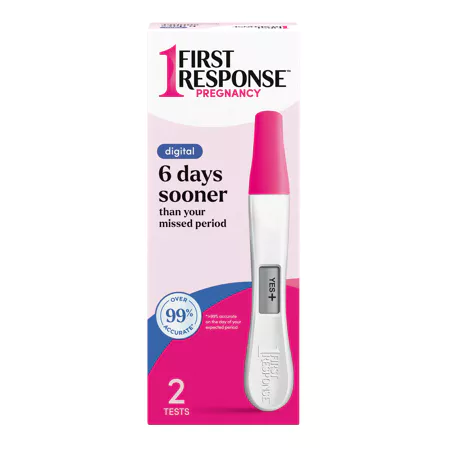
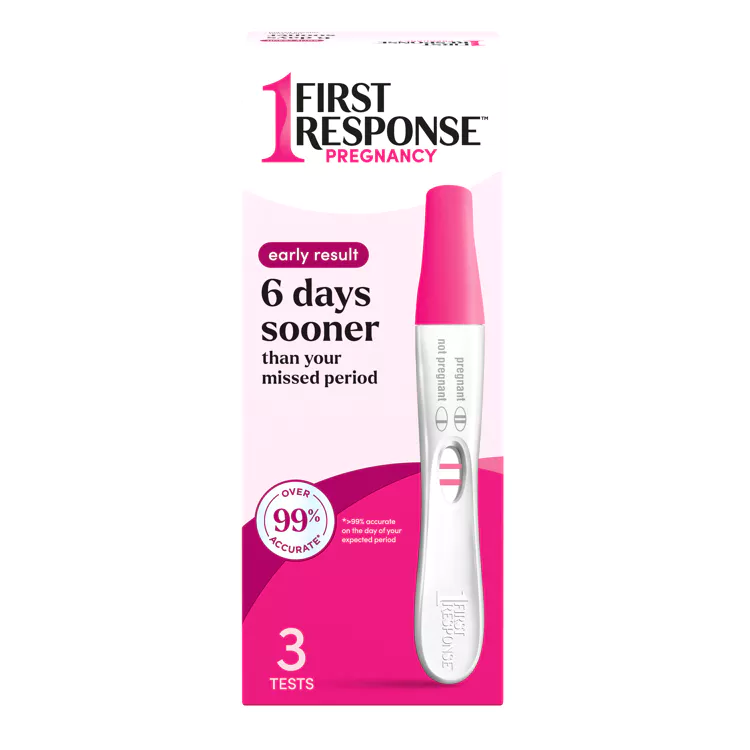
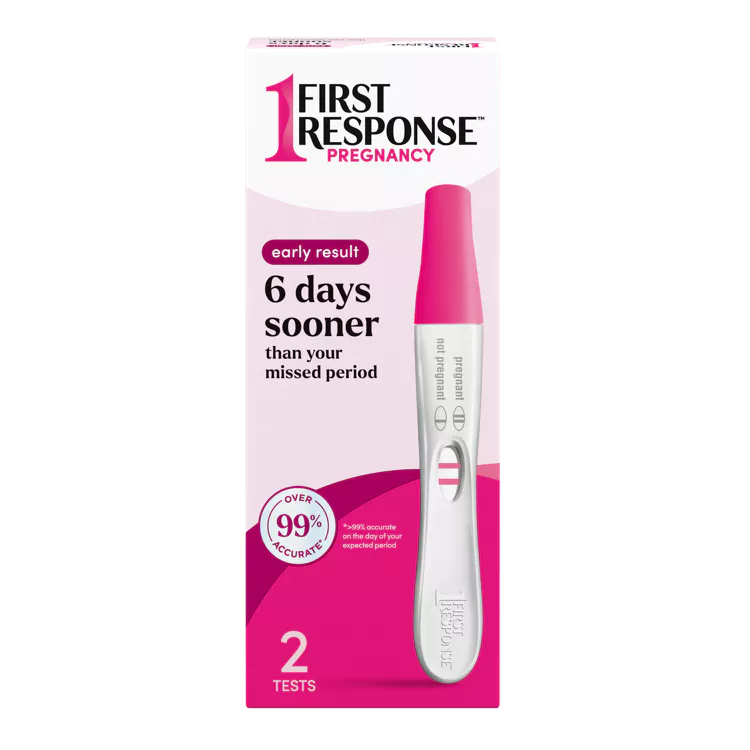
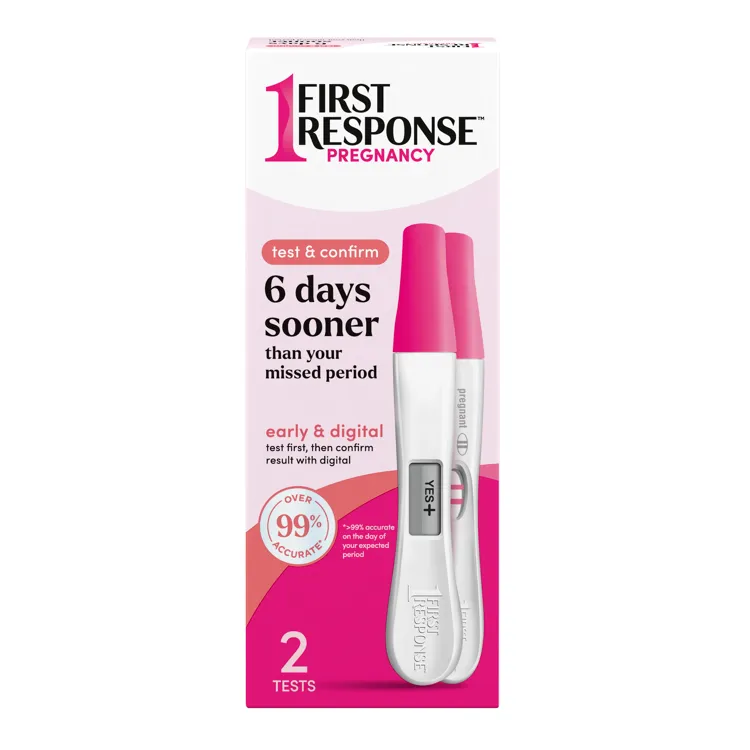
- First Response™ Early Result Pregnancy Test is an easy-to-use test stick that detects all major forms of the pregnancy hormone commonly found in urine. It can identify pregnancy hormone 6 days sooner than the day of your missed period, and it’s over 99% accurate from the day of your expected period.
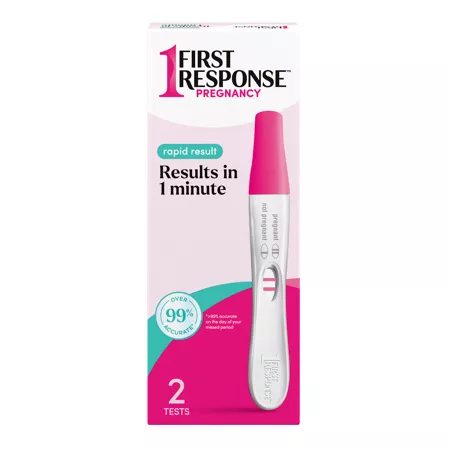
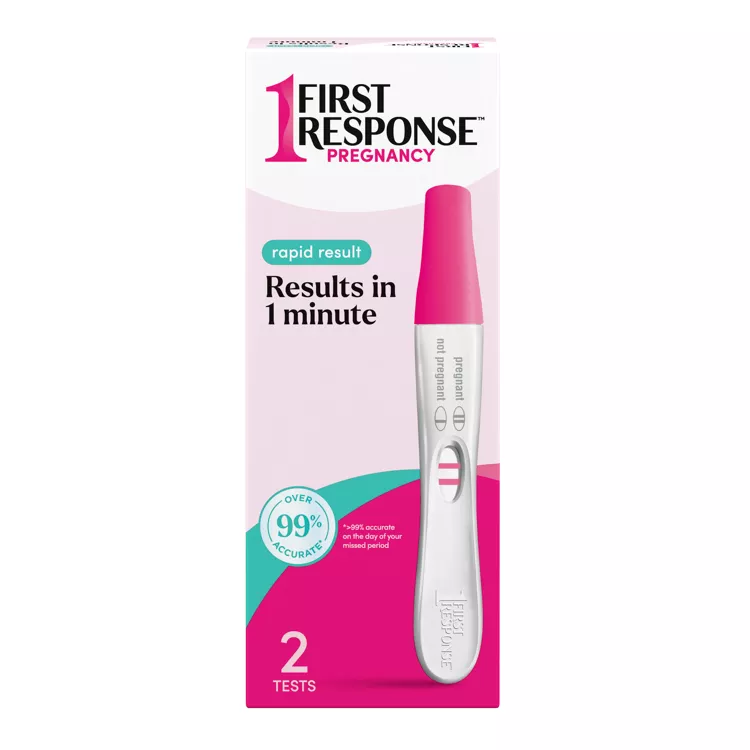
- First Response™ Rapid Result Pregnancy Test delivers quick results after one minute on the day of your missed period or later.
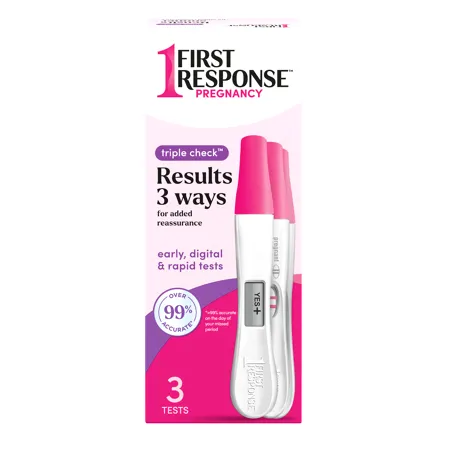
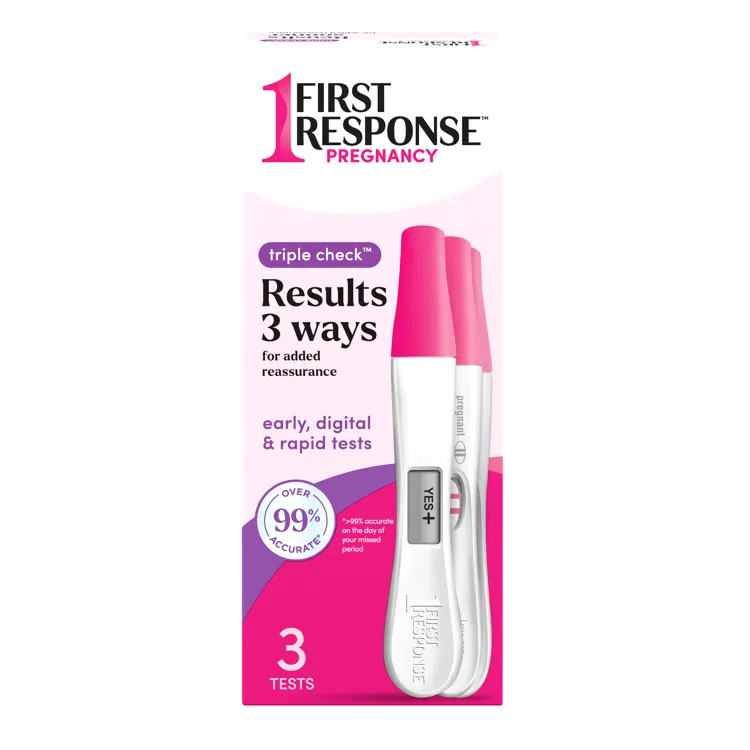
- First Response™ Multi Check Pregnancy Test Kit features 3 tests: 1 EasyCup test with a built-in strip for results in 5 minutes and 2 Rapid Result tests for results in just 1 minute, giving you multiple ways to confirm your results.
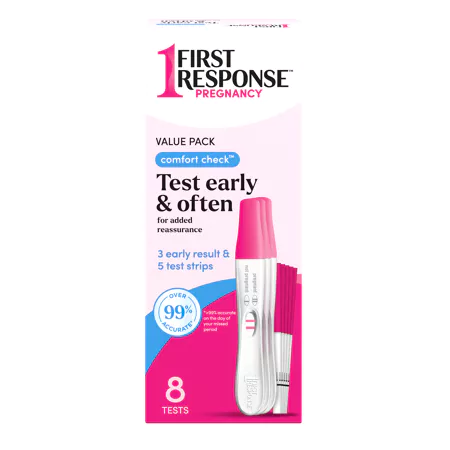
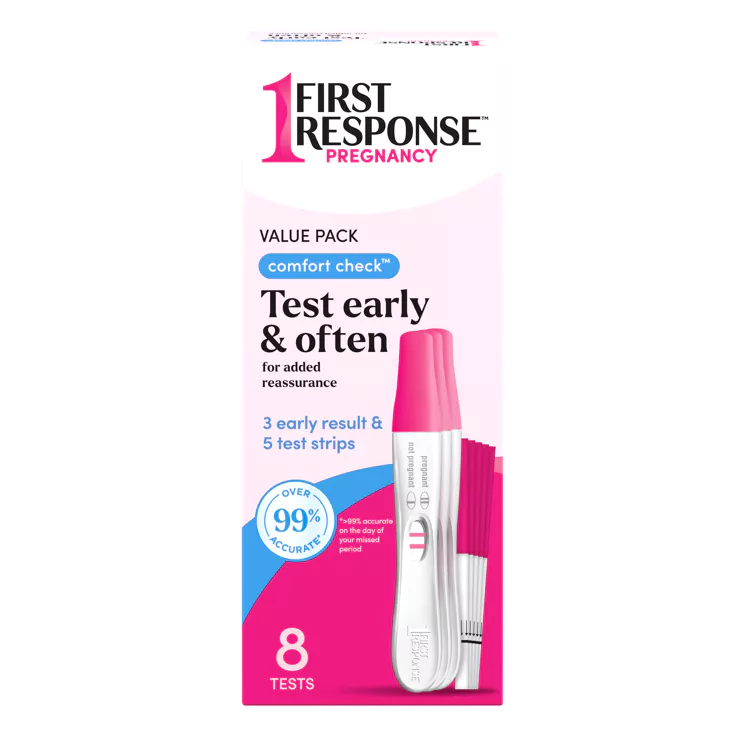
- First Response™ Comfort Check Pregnancy Test Kit includes 8-pregnancy tests: 3 Early Result Pregnancy Test Sticks and 5 Pregnancy Test Strips, allowing you to test frequently.
Don’t forget to explore our other pregnancy articles for ongoing support and guidance throughout your pregnancy journey.
1 FIRST RESPONSE™ Early Result detects the pregnancy hormone 6 days sooner than the day of your missed period (5 days before the day of expected period).
2FIRST RESPONSE™ Early Result and Digital Pregnancy Test are 99% accurate at detecting typical pregnancy hormone levels from the day of your expected period. Rapid Result is 99% accurate at detecting typical pregnancy hormones from the day of your missed period. Note that hormone levels vary.
The content provided on this page is intended for informational and educational purposes only. It is not a substitute for professional medical advice, diagnosis, or treatment. Always seek the advice of a qualified healthcare provider with any questions you may have regarding a medical condition.