


A late or missed period can make you hopeful (if you’re trying to get pregnant) or worried (if you’re not). While pregnancy is one cause of your period not arriving on schedule, it’s not the only reason you might be late or you might skip a cycle. Myriad factors from stress or miscounting to larger underlying medical reasons can cause your period to be delayed or missed.
Here are 10 potential reasons for a late or skipped period that might cause you to be irregular. Always check in with your doctor to confirm a pregnancy or to help identify if you are having a medical issue.
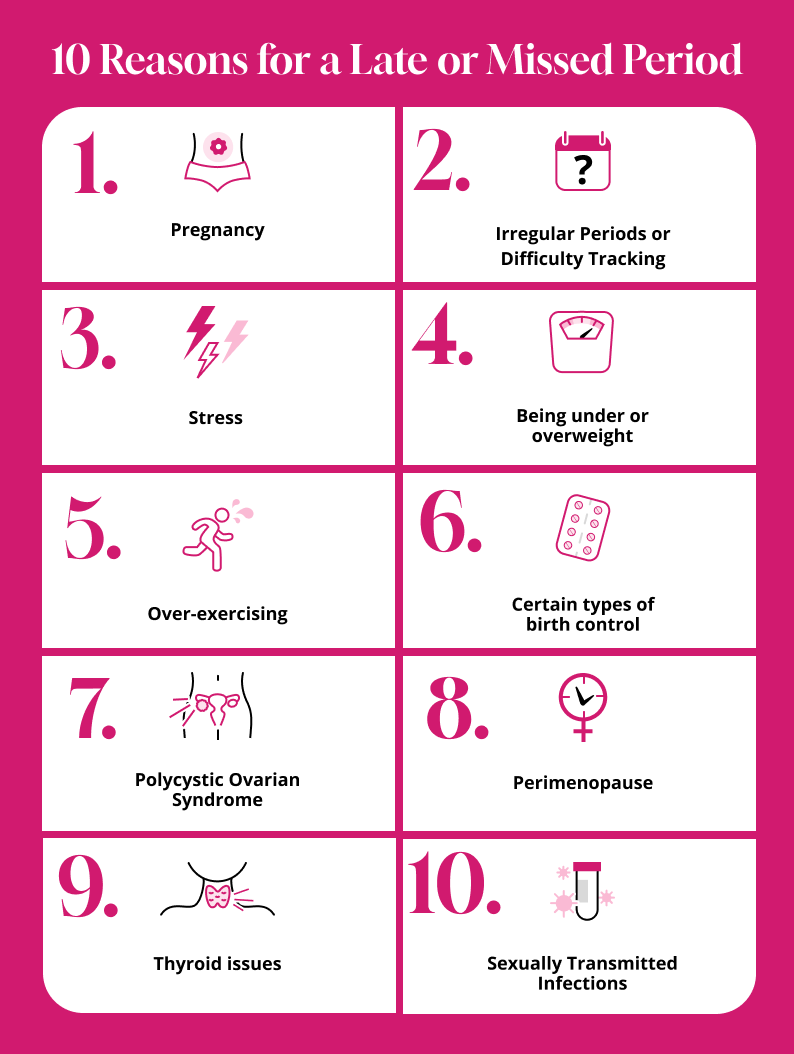
1. Pregnancy
If you’re sexually active and have reached puberty, a missed or late period could mean you’re pregnant, even if you don’t have any other symptoms. Even if you have light spotting that is less than your normal period, you may be experiencing implantation bleeding. It’s always a good idea to take a pregnancy test whenever your period doesn’t arrive as expected.
If you’ve ruled out a pregnancy by taking an at-home pregnancy test or a visit with your doctor, there are other reasons you might skip a period or for it to be delayed.
2. Irregularity or Difficulty Tracking
It might not be that your period is “late” if you have irregular periods, which can be difficult to track. Although most women have a cycle of 21 to 35 days, between 14% and 25% of people with uteruses have irregular cycles. That can mean shorter or longer cycles that might vary from month-to-month and make it appear as if you’ve skipped a period or are late.
There can be underlying medical causes for irregularity, so check with your doctor if your periods don’t fall into a predictable pattern. Irregular periods can make it harder to know if you’re pregnant (since you might not be sure when you’re expecting your period), so a pregnancy test can help confirm.
3. Stress
Believe it or not, too much stress over time can cause your period to be late or for you to miss a period. When you’re chronically stressed, your body produces too much cortisol, which can disrupt the interaction between your brain and your ovaries regulating your cycle. While a fleeting stressful moment is not generally going to impact your period regularity, ongoing high levels of stress can cause your period to be later, lighter, or missed altogether.
Tactics to help reduce your stress, such as relaxation exercises or breathing, physical exercise, or psychotherapy can help stabilize your menstrual cycles if your period is delayed or absent due to chronic stress.
4. Being Under or Overweight
Being underweight, defined by the CDC as a Body Mass Index (BMI) lower than 18.5 or can contribute to a delayed or missed period. A BMI higher than 30 can also lead to menstrual irregularity or heavy periods. This is because your hormone levels are affected by your weight and the amount of fat on your body.
If you’ve suddenly gained or lost a significant amount of weight, that can lead to a change in your hormones that influence your cycle, including being late or skipping a period. Eating disorders, such as anorexia nervosa or bulimia can disrupt your hormones and cause you to miss a period or for them to stop altogether.
5. Over-Exercising
People who participate in extreme exercise such as marathons or who have exercise bulimia can have a delayed or missed period. In some cases, too much exercise can cause amenorrhea, or an absence of menstruation, typically due to very low body fat levels.
6. Certain Types of Birth Control
Certain types of contraception, such as a hormonal IUDs, shots, birth control implants, patches or rings can cause you to miss a period. In many cases, hormonal birth control can pause your cycles altogether. In addition, you can have irregular or skipped periods after you remove an IUD or implant or stop getting hormonal injections.
Follow your doctor’s recommendations about using other methods of birth control and for when to be concerned if your period is delayed or missed.
7. Polycystic Ovarian Syndrome (PCOS) or Ovarian Cysts
Polycystic Ovarian Syndrome can affect hormone regulation in your body, which can disrupt your menstrual cycle. Some ovarian cysts themselves (without PCOS) can also cause your period to be late, skipped or irregular.
Check in with your doctor to rule out these possibilities.
8. Perimenopause or Primary Ovarian Insufficiency (POI)
Perimenopause is a newer term to describe the years leading up to your period stopping altogether, known as menopause. One of the symptoms of perimenopause is irregular periods as your hormones fluctuate, leading to unpredictable ovulation.
The period of perimenopause can be as much as a decade before menopause, which typically happens between the ages of 45 and 55. A change in your menstrual cycle, causing a delay in an expected period or a missed period could be a sign that you’re entering perimenopause, especially if you’re around 40 or older.
In addition, about 1 in 100 women begin menopause even earlier, known as Primary Ovarian Insufficiency (POI). If you’re under 40, not pregnant, and are having irregular periods without another explanation, check in with your doctor.
9. Thyroid Issues or Other Underlying Medical Conditions
An underactive or overactive thyroid (hypothyroidism or hyperthyroidism) can lead to delays in your menstrual cycle or a missed period. Your thyroid helps regulate your metabolism and hormone production in your body, which can affect your periods.
The good news is that once your thyroid is controlled by medication, most people’s cycles return to a typical regularity.
Other medical conditions that can also cause your periods to be delayed or missed include Addison’s disease, Cushing syndrome, Celiac disease, Crohn’s disease and diabetes. All of these can lead to potential missed or late periods due to disrupted hormone levels in your body.
10. Sexually Transmitted Infection
More rarely, changes in your menstrual cycle, including irregular bleeding or delayed or missed periods can be caused by certain sexually transmitted infections (STIs), such as chlamydia or gonorrhea, particularly if they have progressed to Pelvic Inflammatory Disease. Regular STI screening if you are sexually active, especially if you have multiple partners or do not use a condom, can help rule out this possibility.
Does Your Late or Missed Period Mean You’re Pregnant?
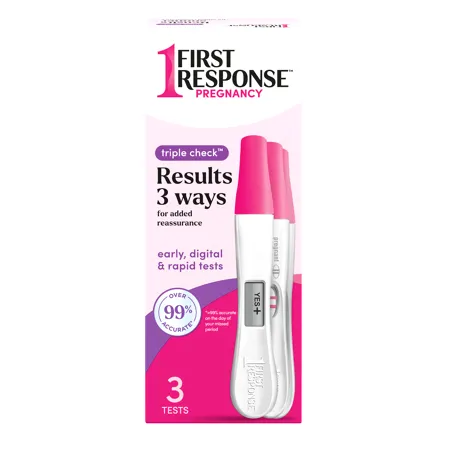
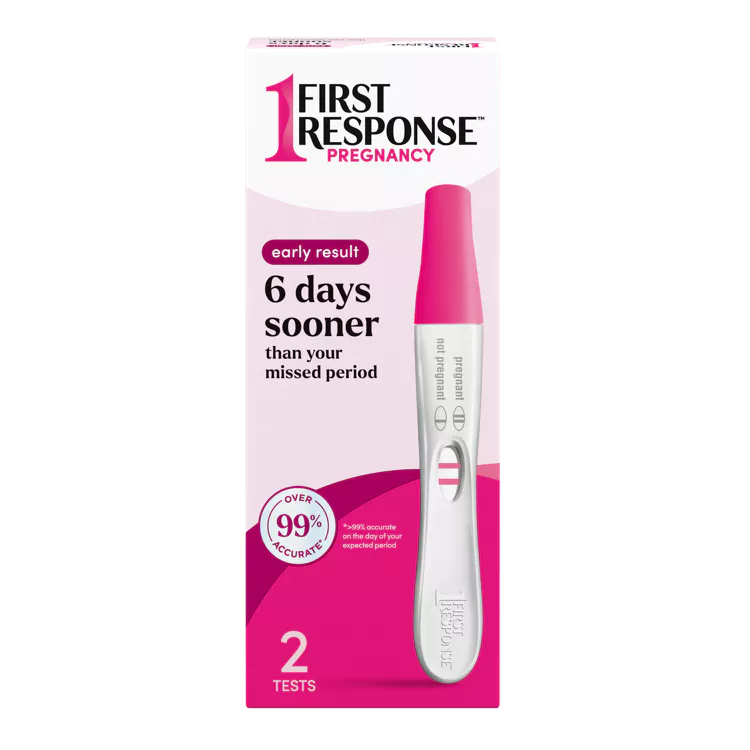
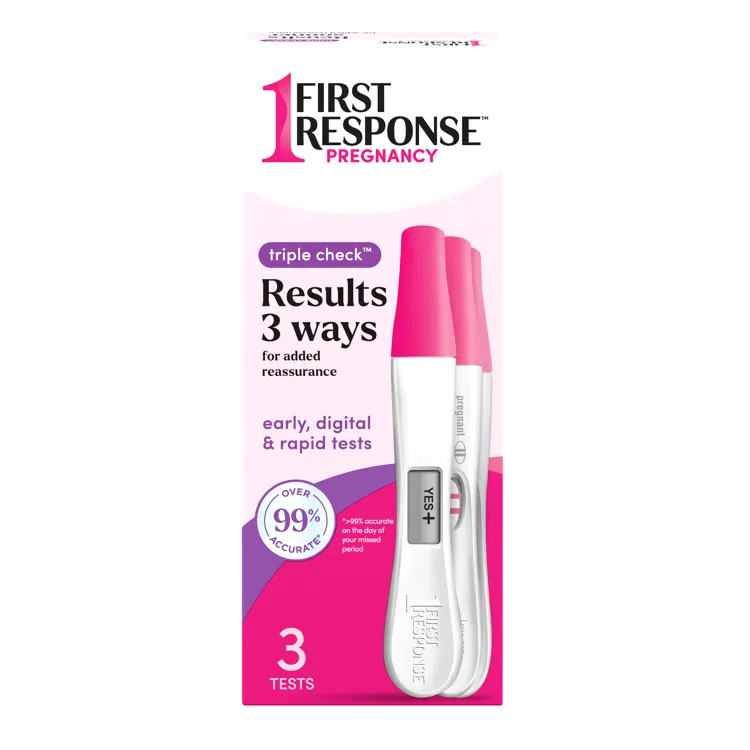
If you were expecting your period and it did not arrive, take an at-home urine test to learn if you might be pregnant. You can use an online calculator to help you know how soon you can take a pregnancy test. First Response® Early Result pregnancy test is over 99% accurate from the day of your expected period* to help you feel certain about your results. Or try the Triple Check Pregnancy Test Kit for three different tests to confirm your results.
If your results are negative and your period still does not arrive, check in with your doctor to see if one of these other reasons is the cause for your delay.
* 99% accurate at detecting typical pregnancy hormone levels. Note that hormone levels vary. See insert.