


If you’re trying to conceive (TTC), ovulation testing can be an important part of improving your chance of getting pregnant. Ovulation testing can seem unusual, but it’s all a matter of hormones and your menstrual cycle. FIRST RESPONSE is here to help demystify ovulation testing and offer some tips to make it even simpler and easier.
Sex During Ovulation Improves Your Chance of Getting Pregnant
Before you use an ovulation test, you need to first determine the length of your normal menstrual cycle. It could be anywhere from 20 to 45 days long. Start counting on day one of your period (the first day of bleeding or spotting) — and stop counting on the first day of your next period. This is the length of your cycle.
If the length of your cycle is different each month by more than a few days, take the average number of days over the last three months.
Once you determine the length of your menstrual cycle or an average number of days, use the chart below to determine the day you should begin ovulation testing.
On the top row of the chart, find the number that corresponds to the length of your cycle. Directly below that number is a smaller number. This is the day of your cycle when you should begin testing to find out if you are ovulating.
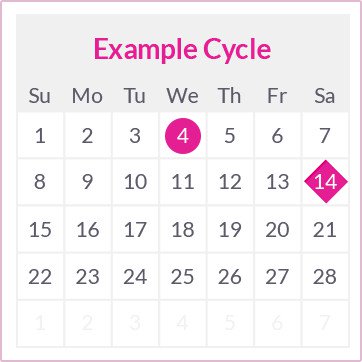
Here’s an example: Jennifer has a regular cycle of 28 days and started her period on the 4th day of the month. Beginning with the 4th as day one, she counts forward 11 days and begins ovulation testing on the 14th.
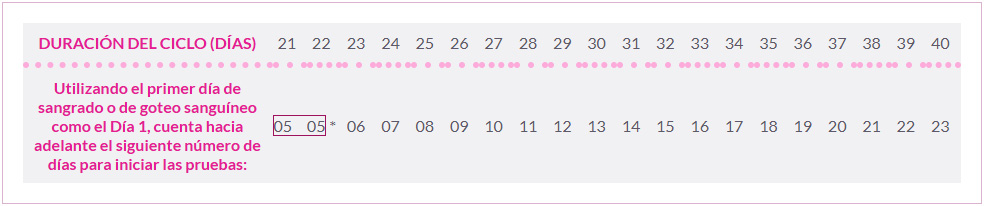
*Daily Digital Ovulation Testing begins on day 5.
Ovulation Test-Taking Tips
Ovulation tests work by detecting a hormone in your urine that is present at ovulation. The LH hormone surges at ovulation because it is responsible for causing the ripened egg to burst from its follicle. When LH is in your urine, you are in the process of ovulating.
Although many people choose to take an ovulation test when they wake up, it isn’t necessary to take your ovulation test in the morning. Any time of day is fine. However, you should test at approximately the same time each day. Also, drinking excessive amounts of liquid can dilute the LH in your urine. Therefore, it’s best to reduce your liquid intake for two hours before testing.
Ovulation Testing for Your Best Chances of Getting Pregnant
FIRST RESPONSE™ Ovulation Tests are 99% accurate at detecting the surge of LH in your urine that accompanies ovulation. Use ovulation tests to determine the two days every cycle when you are most likely to become pregnant. FIRST RESPONSE Ovulation Test kits come with a full week of tests to help you get the most accurate results.
Note: If you are unsure about your cycle length or when to start testing, call our Consumer Relations Department toll-free at 1-800-367-6022, Monday-Friday, 7:00 AM-5:00 PM, Eastern Time.
For extensive information and support for those trying to conceive, visit:
 1
1